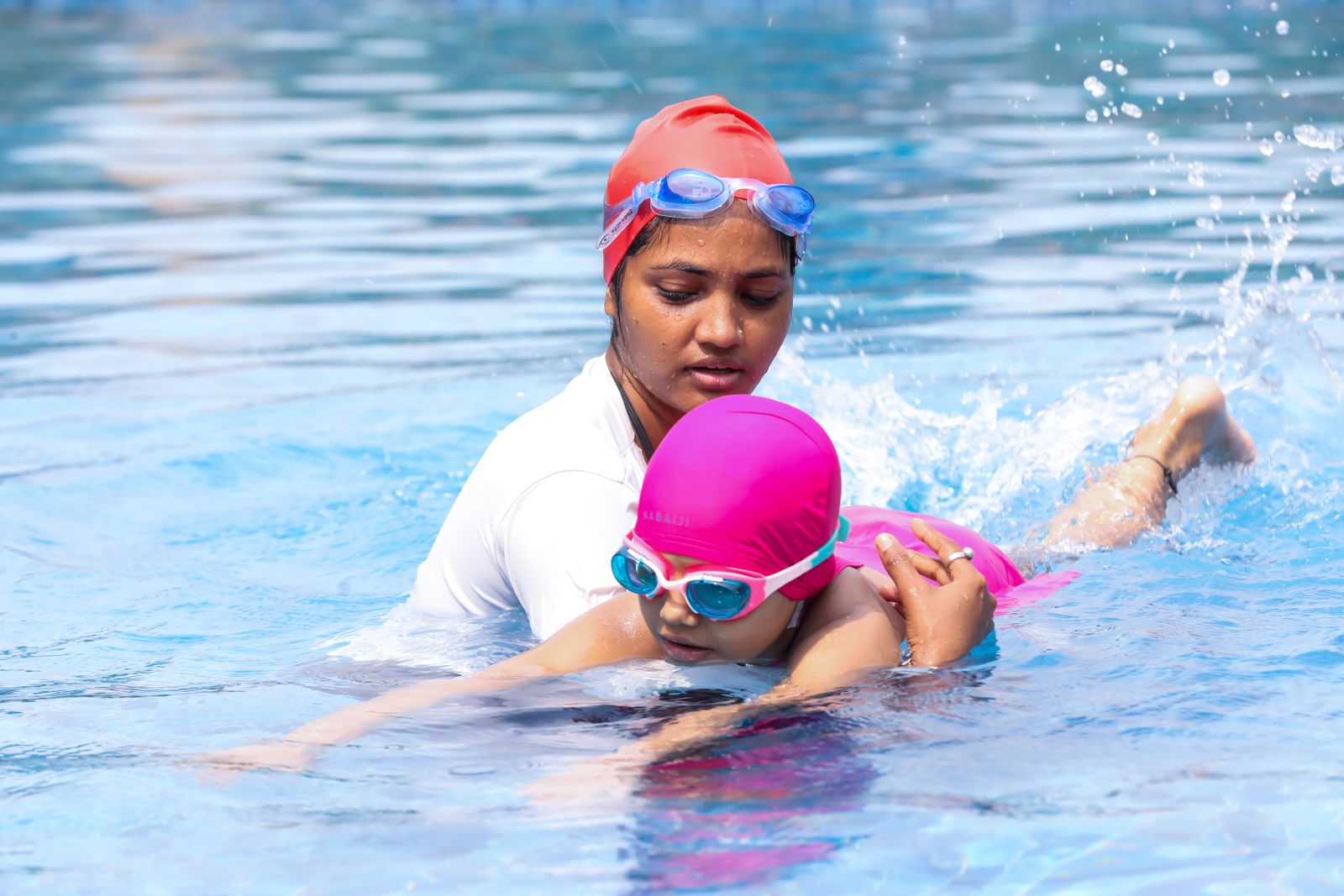
Swim lessons are one of the most valuable things you can give a child — the CDC notes that drowning is a leading cause of death for young children. But lessons vary a lot from program to program. A little homework before you enroll helps you find a school that teaches real water-safety skills, not just time in the pool.
Start with the instructors
Ask what certification the instructors hold. Widely recognized programs include the American Red Cross Water Safety Instructor (WSI) certification and YMCA swim instructor certification, among others. Also ask whether instructors are currently certified in CPR and first aid, and whether everyone who works with children has passed a background check.
Ask who's watching the water
An instructor teaching a group is focused on the students in front of them. Ask whether a separate, certified lifeguard is on duty during lessons — or, if not, exactly how the school supervises everyone in the water.
Look at class size and structure
- How many students there are per instructor, especially for young or beginning swimmers
- Whether classes are grouped by skill level, not just age
- Whether there's a clear progression of levels, so you know what your child is working toward
- Whether parent-and-child classes are offered for infants and toddlers
- Whether parents can watch lessons
What your child should be learning
Polished strokes come later. Early lessons should build water-safety skills: entering and exiting the pool safely, getting comfortable with their face in the water, floating and rolling onto their back to breathe, and getting back to the wall or steps on their own. Ask how the school teaches each of these, and how it tells you when your child is ready to move up.
Practical things worth checking
- Is the facility well kept, and is the water warm enough for young children to stay comfortable?
- What's the make-up policy for missed lessons and sick days?
- Are private or semi-private lessons available for a child who's nervous or needs extra help?
Lessons are one layer, not the whole plan
Pediatric guidance, including from the American Academy of Pediatrics, supports swim lessons as one layer of protection for many children starting around age 1. No amount of lessons makes a child "drown-proof," though. Close, attentive adult supervision around water stays essential no matter how well your child swims.